Honors Life at Whitworth

Recent:

Madalyn Dotson

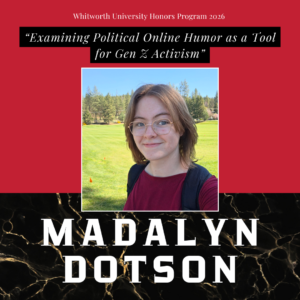
In September of 2025, youth and Gen-Z individuals in Nepal overthrew their corrupt government through a series of protests and riots. They voted for their interim prime minister through Discord, and throughout the protests, the world saw Gen-Z laughing and joking their way through a major historical event. Gen-Z has been nicknamed the “unserious generation”, but in Nepal they also led the movement that led to a significant change in government. This begs the question of how this will inspire other Gen-Z protestors and activists across the world. How does Gen-Z view violence as an actor for change? Do they use humor as a tool, strategy, or a way to cope? How necessary is humor for Gen-Z’s activism? In my academic project, I explored these questions by looking at a variety of examples all over the world, with a focus on Nepal. As someone who is Gen Z, loves memes and humor, and is interested in political activism, I think that this project is important to see how young people are actively changing the world around them.
Read More »

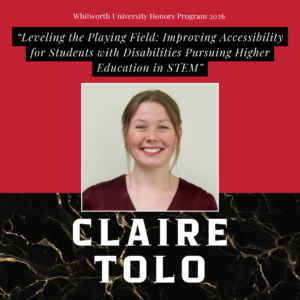
Claire Tolo

Students with disabilities (SWD) make up 17-19% of the student population in higher education institutions. However, research focused on them accounts for only 1% of papers published in education journals. Furthermore, disabled students are less likely to enroll in science, technology, mathematics and engineering (STEM) courses compared to their abled peers. Researchers have posited that this may be due to both physical barriers, such as inaccessible laboratories, and cultural ones, like negative experiences with peers and faculty. So what can universities do to improve the landscape of their STEM cohorts to make them more equitable and inclusive for students with disabilities? Existing research has suggested a variety of solutions, ranging from implementing Universal Design Learning (UDL) to purchasing specialized lab equipment. But there does not yet exist a compilation of the current recommendations for interventions and best practice for improving equity and accessibility in STEM departments. In this project, I will examine the specific challenges faced by SWD in the classroom and laboratory, interventions to improve challenges faced, and practical suggestions institutions can utilize to effectively implement the interventions in their STEM programs.

Read More »

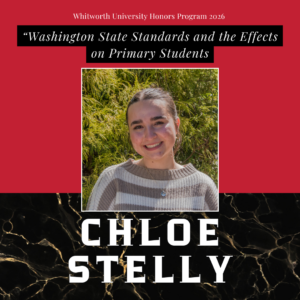
Chloe Stelly

Since going through the Education Department here at Whitworth, I have become increasingly interested in the academic achievement of our students here in Washinton. Education has changed so drastically over the years, and the hope is that we are still meeting the needs of our students in an ever-shifting society. Since Covid, state testing has dropped and has continued to do so which raises concern; how can our children get the best education when standards are so demanding? Is the education we are providing right now the education our students need? I wanted to study the effects that state standards have on primary children and whether or not an increase in academic performance is happening in our schools. The reason for this project is to study the impact of our state standards on the growth and development of our students.

Read More »

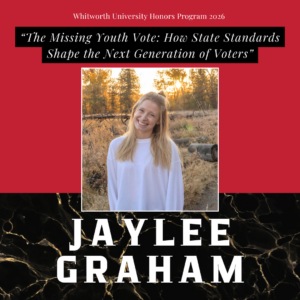
Jaylee Graham

Gen Z is arguably the most politically outspoken generation in history. From social media activism to grassroots organizing, we aren’t afraid to use our voices to demand change. Yet, there’s a frustrating paradox at the heart of our democracy: despite being the most vocal, 18–24-year-olds consistently remain in the demographic with the lowest voter turnout. This project is driven by one central question: What do we actually need to do to increase young voter turnout?
I believe that education is at the root of many of the systemic problems we see in the world today. If we want to change the trajectory of our society, we have to look at where our civic identity is formed. For the vast majority of Americans, high school is the last time they will be part of a formal, universal educational environment. This makes the high school classroom our final and most critical opportunity to reach every future citizen. If we aren’t using that time to effectively teach the voting process and the importance of civic agency, we are leaving the health of our democracy to chance.

Read More »

Upcoming Opprotunities:

The Pursuit of a More Perfect Union

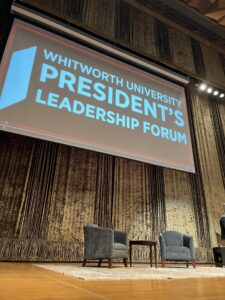
On October 14th, Jon Meacham visited Whitworth at President McQuilken’s 2026 Presidential Leadership Forum, this year hosted at the Fox Theatre. I attended his evening talk at the Fox called, “American Struggle: Democracy, Dissent, and the Pursuit of a More Perfect Union,” a nod to the title of his most recent book published earlier this year.

Read More »

Micro-Internship: KSPS PBS LearningMedia

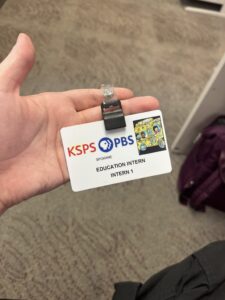
The KSPS PBS micro-internship is focused on their online educational content. PBS has a learning platform called PBS LearningMedia where any station from across the country can upload lessons, videos, and teaching tools for free use by teachers and students. KSPS is one of the stations that contributes material, but they’ve become increasingly aware that the material currently up isn’t as robust as it could be.

Read More »

Whitworth Launch

We are proud to announce that micro-internships, mentors, and upcoming professionalization events now have a home on the Whitworth Launch website. This site hosts the applications and internship postings, connecting you directly with the people who want to give you a job.

Read More »

Fall 26 Speakers

Fall 26 Speakers Jon Meacham Meghan Sullivan Dr. Robert George Dr. Cornel West October 14th: Jon Meacham “American Struggle: Democracy, Dissent, and the Pursuit of

Read More »

Internships:

Summers Capturing Lilacs

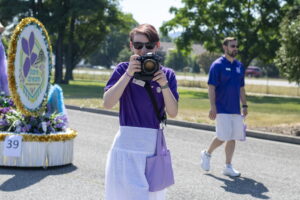
Some people go to the lake, some people pick up extra shifts, and some spend hours tanning in the sun. Me? I spend my summer Saturdays attending regional festivals and parades with the Spokane Lilac Festival.

Read More »

Micro-Internship: KSPS PBS LearningMedia

The KSPS PBS micro-internship is focused on their online educational content. PBS has a learning platform called PBS LearningMedia where any station from across the country can upload lessons, videos, and teaching tools for free use by teachers and students. KSPS is one of the stations that contributes material, but they’ve become increasingly aware that the material currently up isn’t as robust as it could be.

Read More »

Whitworth Launch

We are proud to announce that micro-internships, mentors, and upcoming professionalization events now have a home on the Whitworth Launch website. This site hosts the applications and internship postings, connecting you directly with the people who want to give you a job.

Read More »

On-Campus Spotlights:

Summers Capturing Lilacs

Some people go to the lake, some people pick up extra shifts, and some spend hours tanning in the sun. Me? I spend my summer Saturdays attending regional festivals and parades with the Spokane Lilac Festival.

Read More »

Micro-Internship: KSPS PBS LearningMedia

The KSPS PBS micro-internship is focused on their online educational content. PBS has a learning platform called PBS LearningMedia where any station from across the country can upload lessons, videos, and teaching tools for free use by teachers and students. KSPS is one of the stations that contributes material, but they’ve become increasingly aware that the material currently up isn’t as robust as it could be.

Read More »

Books to Prisoners

The Whitworth Sigma Tau Delta Chapter wins a grant to support the Spokane Books to Prisoners branch, and organization fostering love of reading and education to those who are incarcerated.

Read More »

Study Abroad:

Beach Cleanup on Mokulē‘ia Army Beach: A Jan Term in Hawai’i

To end our first week on the island of O’ahu, Hawai’i, the 2026 Jan term Honors class went down to Mokulē‘ia Army Beach, a 2-minute drive from our camp, to clean up trash from the beach for an hour. We split up into groups of 3 to 6, turning our project into a little competition of which group could collect the most trash.

Read More »

Restoring Language

The prospect of entire languages going extinct, however, introduces questions: What is lost when a language dies? How do we revive a dying language?

Read More »

Green World Coffee Farm

Every day, an average of 2.25 billion cups of coffee are consumed across the world, and while Hawaiian grown coffee beans account for less than 1 percent of annual United States coffee consumption, the state still takes great pride in their coffee production.

Read More »

Research:

Britney Lewis

The stereotype of women apologizing more than men was tested by a psychology study which found that women apologized at higher frequencies. Yet, each gender apologized for an equal proportion of their offenses if it was recognized by them as a transgression (81% mean for men and women). My question was inspired by considering the compliment to an apology, forgiveness. If women engage with apology behavior at higher frequencies, whether or not a transgression has been fully realized, does this water down their engagement with relational repair? Conversely, does a lower frequency and a higher threshold for viewing a situation as apology-worthy influence greater levels of sincerity in the interpretation of forgiveness for men?

Read More »

Sera Wiesen

With the overturing of Roe V Wade came a plague of misinformation surrounding reproductive health. This led to medical practitioners and specialists being misinformed and fearing prosecution for providing lifesaving procedures on pregnant women. Reproductive healthcare doesn’t just involve abortion, it includes emergency care, about the right to survive a pregnancy. The misinformation flooding the system is making everything worse. State laws are murky and full of vague language state by state, leaving medical professionals unsure if they’d be prosecuted for providing necessary, lifesaving care for their patients. To me, it is wrong that in a first world country, people are left to suffer because of this misinformation. My goal is to bring light to proper information about abortion care even in the most restrictive states.

Read More »

Hannah Cordero-Johnson

Immigration has long been a contentious issue in the U.S., but recent years have seen increasingly negative public attitudes shaped by race, religion, politics, and nationalism. Notably, research shows that white evangelical Christians often support restrictive immigration policies—despite professing compassion and a biblical call to welcome the stranger. This study explores how those contradictions play out locally in Spokane, Washington, by centering the voices of immigrants and refugees and examining how race, religion, and legal status shape their resettlement experiences.

Read More »

Vincent Inayat

My honors capstone project investigates how systemic marginalization affects the political participation and lived experiences of religious minorities in Pakistan, focusing particularly on Christian communities in Karachi. Through qualitative research involving semi-structured interviews, I examined how fear, discrimination, and historical shifts in state ideology contribute to political disengagement. Participants expressed deep frustration with exclusionary practices, legal discrimination through blasphemy laws, and socio-economic disenfranchisement. Yet, I also uncovered stories of remarkable resilience such as communities leveraging civil society, clustering in safe neighborhoods, and using social media as new platforms for political expression. 

Read More »