Honors JA/SP 2027 Course Catalogue
Take a look at all the Honors Program has to offer this Jan term and Spring!

Take a look at all the Honors Program has to offer this Jan term and Spring!
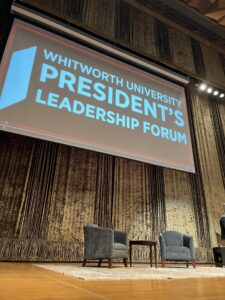
On October 14th, Jon Meacham visited Whitworth at President McQuilken’s 2026 Presidential Leadership Forum, this year hosted at the Fox Theatre. I attended his evening talk at the Fox called, “American Struggle: Democracy, Dissent, and the Pursuit of a More Perfect Union,” a nod to the title of his most recent book published earlier this year.
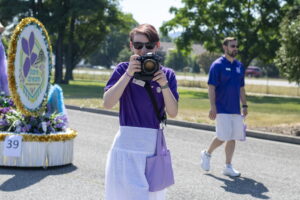
Some people go to the lake, some people pick up extra shifts, and some spend hours tanning in the sun. Me? I spend my summer Saturdays attending regional festivals and parades with the Spokane Lilac Festival.
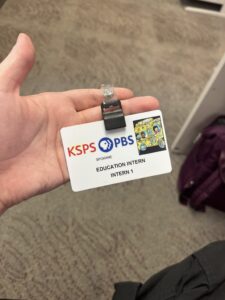
The KSPS PBS micro-internship is focused on their online educational content. PBS has a learning platform called PBS LearningMedia where any station from across the country can upload lessons, videos, and teaching tools for free use by teachers and students. KSPS is one of the stations that contributes material, but they’ve become increasingly aware that the material currently up isn’t as robust as it could be.
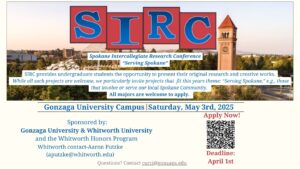
SIRC is a conference sponsored by Whitworth and Gonzaga University for undergraduate students across Spokane to present their research and creative works.

The first Honors Lunch Network of the Spring semester focused on how to get internships and faculty research assistantships.
Whitworth to send 9 presenters to the Sigma Tau Delta, an international English Honors Society, Conference March 19-22 in Pittsburg, PA.
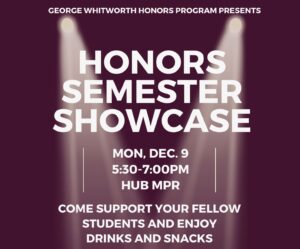
Come admire Honors student research, final projects, and creative works in the HUB MPR from 5:30-7:00PM on Monday December 9th.
Some people go to the lake, some people pick up extra shifts, and some spend hours tanning in the sun. Me? I spend my summer Saturdays attending regional festivals and parades with the Spokane Lilac Festival.
The KSPS PBS micro-internship is focused on their online educational content. PBS has a learning platform called PBS LearningMedia where any station from across the country can upload lessons, videos, and teaching tools for free use by teachers and students. KSPS is one of the stations that contributes material, but they’ve become increasingly aware that the material currently up isn’t as robust as it could be.

We are proud to announce that micro-internships, mentors, and upcoming professionalization events now have a home on the Whitworth Launch website. This site hosts the applications and internship postings, connecting you directly with the people who want to give you a job.
Your Planning Guide to 2026 Fall Term Registration!
Some people go to the lake, some people pick up extra shifts, and some spend hours tanning in the sun. Me? I spend my summer Saturdays attending regional festivals and parades with the Spokane Lilac Festival.
The KSPS PBS micro-internship is focused on their online educational content. PBS has a learning platform called PBS LearningMedia where any station from across the country can upload lessons, videos, and teaching tools for free use by teachers and students. KSPS is one of the stations that contributes material, but they’ve become increasingly aware that the material currently up isn’t as robust as it could be.

The Whitworth Sigma Tau Delta Chapter wins a grant to support the Spokane Books to Prisoners branch, and organization fostering love of reading and education to those who are incarcerated.

Noran Khalil is an Honors Bioinformatics senior working closely with Dr. Measor in the microdevices lab. Khalil has presented her research at several large conferences in the U.S.
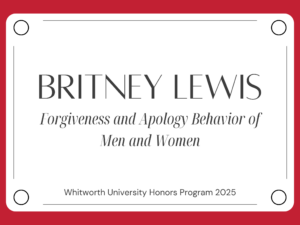
The stereotype of women apologizing more than men was tested by a psychology study which found that women apologized at higher frequencies. Yet, each gender apologized for an equal proportion of their offenses if it was recognized by them as a transgression (81% mean for men and women). My question was inspired by considering the compliment to an apology, forgiveness. If women engage with apology behavior at higher frequencies, whether or not a transgression has been fully realized, does this water down their engagement with relational repair? Conversely, does a lower frequency and a higher threshold for viewing a situation as apology-worthy influence greater levels of sincerity in the interpretation of forgiveness for men?
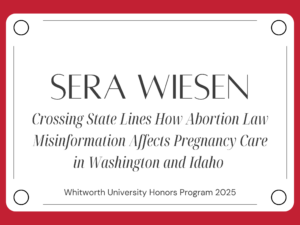
With the overturing of Roe V Wade came a plague of misinformation surrounding reproductive health. This led to medical practitioners and specialists being misinformed and fearing prosecution for providing lifesaving procedures on pregnant women. Reproductive healthcare doesn’t just involve abortion, it includes emergency care, about the right to survive a pregnancy. The misinformation flooding the system is making everything worse. State laws are murky and full of vague language state by state, leaving medical professionals unsure if they’d be prosecuted for providing necessary, lifesaving care for their patients. To me, it is wrong that in a first world country, people are left to suffer because of this misinformation. My goal is to bring light to proper information about abortion care even in the most restrictive states.
Immigration has long been a contentious issue in the U.S., but recent years have seen increasingly negative public attitudes shaped by race, religion, politics, and nationalism. Notably, research shows that white evangelical Christians often support restrictive immigration policies—despite professing compassion and a biblical call to welcome the stranger. This study explores how those contradictions play out locally in Spokane, Washington, by centering the voices of immigrants and refugees and examining how race, religion, and legal status shape their resettlement experiences.
My honors capstone project investigates how systemic marginalization affects the political participation and lived experiences of religious minorities in Pakistan, focusing particularly on Christian communities in Karachi. Through qualitative research involving semi-structured interviews, I examined how fear, discrimination, and historical shifts in state ideology contribute to political disengagement. Participants expressed deep frustration with exclusionary practices, legal discrimination through blasphemy laws, and socio-economic disenfranchisement. Yet, I also uncovered stories of remarkable resilience such as communities leveraging civil society, clustering in safe neighborhoods, and using social media as new platforms for political expression.