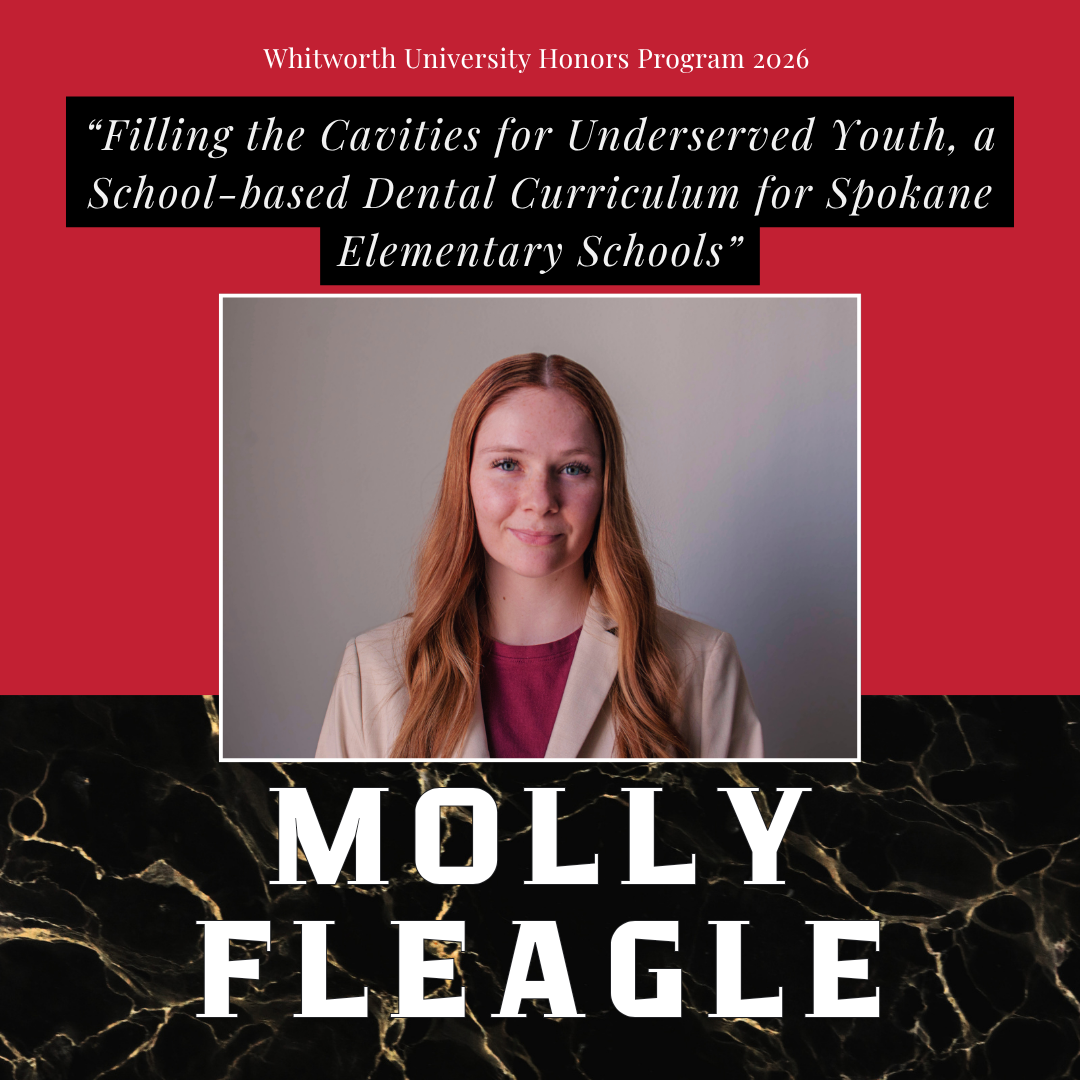
Molly Fleagle

Access to affordable and preventive dental care remains a significant challenge in Spokane, Washington, particularly for children in low-income, minority, and non-English-speaking families. Many residents with Apple Health coverage, the dental care insurance for low-income families, still face barriers to treatment due to limited provider participation and low reimbursement rates. Compounding these disparities, Spokane is the largest city in Washington that has not implemented water fluoridation, contributing to higher rates of untreated tooth decay among children. This project seeks to address these oral health inequities by developing a proposal advocating for school-based preventive dental programs and curricula, specifically brushing techniques, the truth about cavities, and demonstrations in Spokane’s low-income elementary schools. Ultimately, this work seeks to improve equitable access to dental care for Spokane’s children and contribute to long-term community health outcomes.

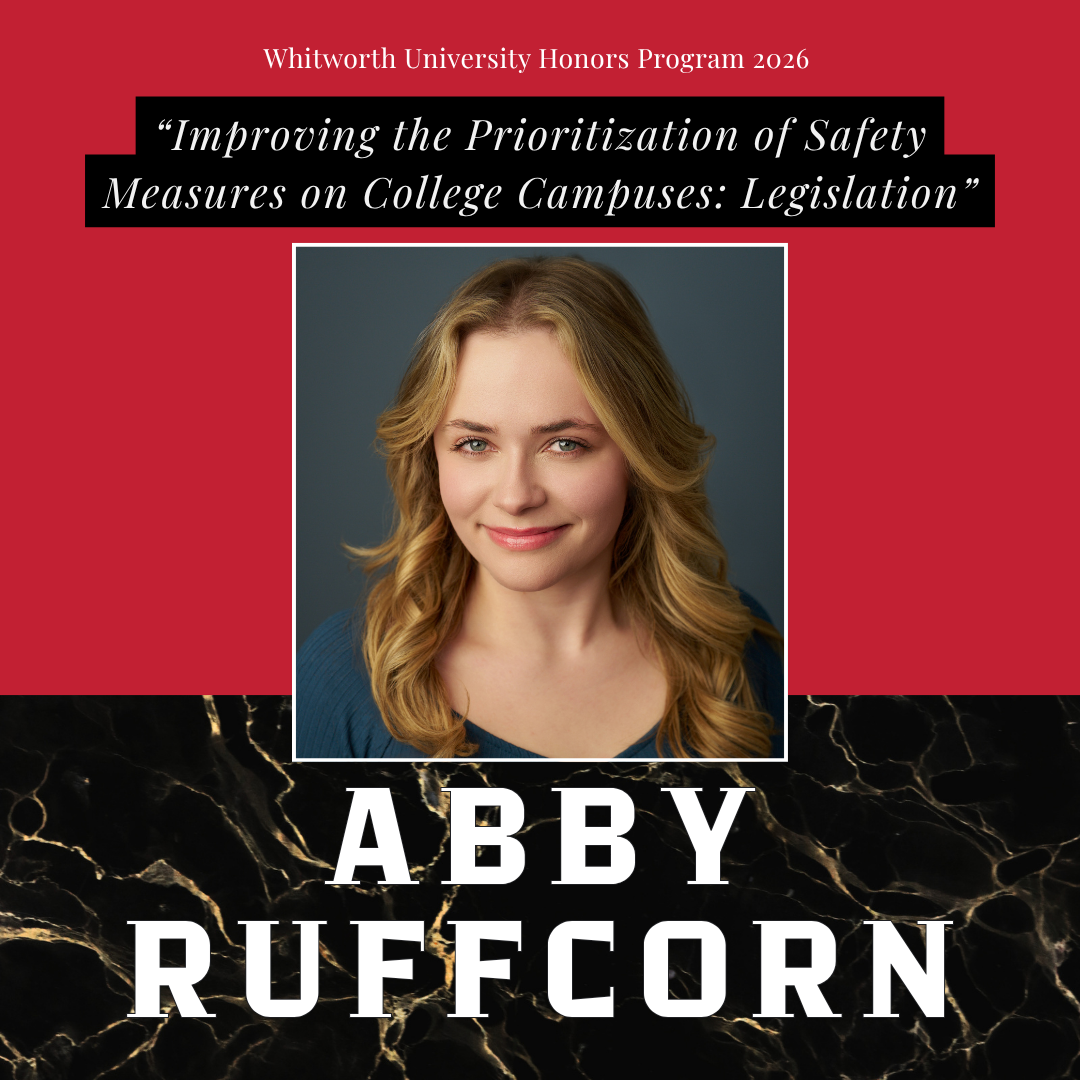
Abby Ruffcorn

Over the past 10 years there has been a huge uptick in violence on college campuses in the United States, however, there has been no significant state or federal legislative efforts produced to work to protect students on campuses. In addition, Campus Security staff members nationwide have been overwhelmed and have been facing burnout due to lack of support from university administrators, leaving college campuses and their students vulnerable. Under the Cleary Act, nationwide, campuses have reported over 23,000 crimes on college campuses. This is a situation that has been pushed forward even more by the increase of political divisions on campuses and the prevalent nature of protests that turn unpeaceful and spark further violence. This project seeks to demonstrate the need for federal legislation that demands one professional campus security officer per two hundred students on any college campus that takes federal funding from the United States government. Currently, in the United States, there is no clear baseline/bench marker for how many campus security officers an institution needs to have. This lack of foresight leaves room for campus violence to surge. Through this project I will write a policy that institutes a required number of security officers on any campus that takes federal funding and identifies itself as a university. 

HN 300 and 400

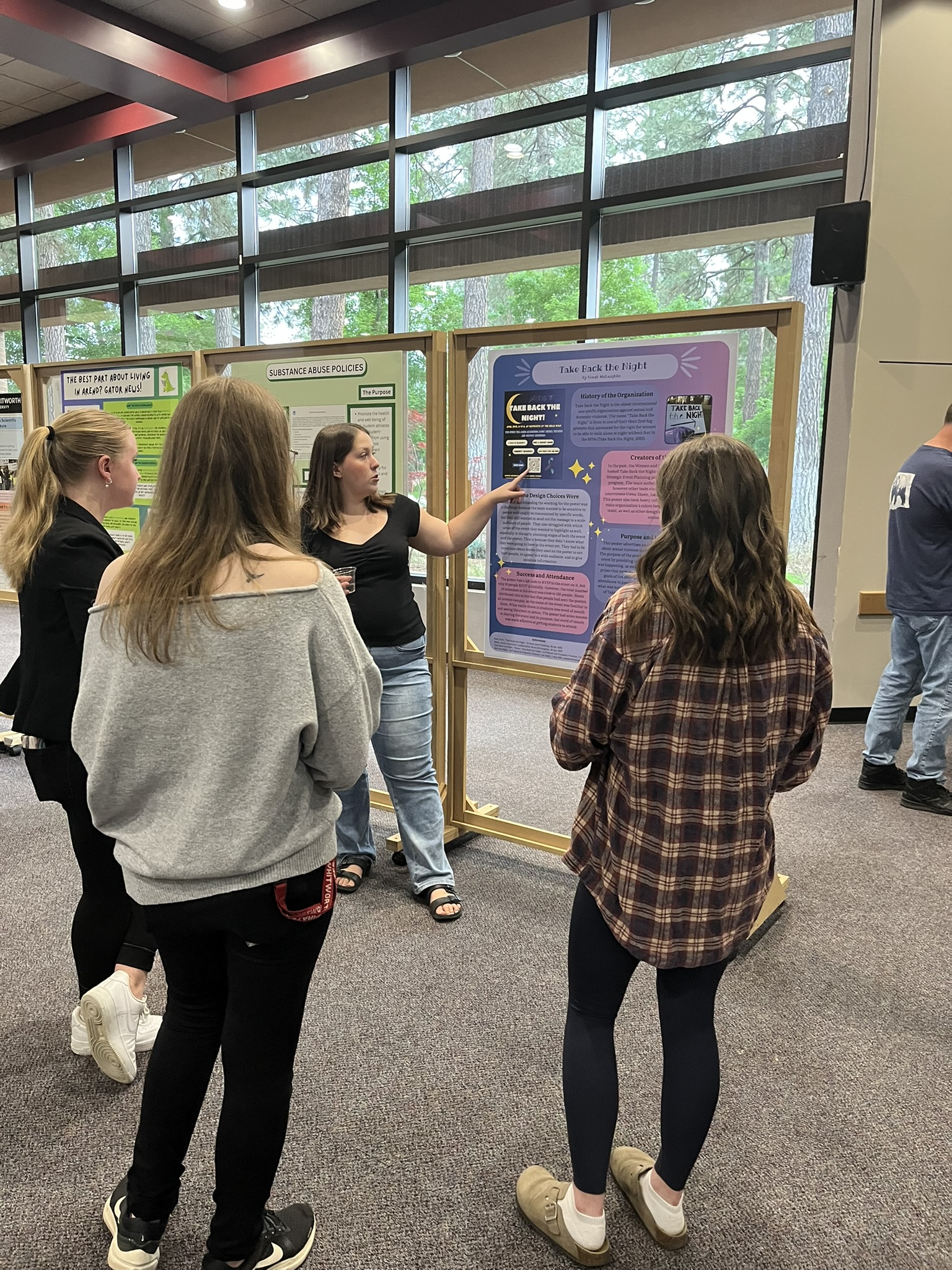
A core part of the Honors Program here at Whitworth is our final capstone project.

Britney Lewis

The stereotype of women apologizing more than men was tested by a psychology study which found that women apologized at higher frequencies. Yet, each gender apologized for an equal proportion of their offenses if it was recognized by them as a transgression (81% mean for men and women). My question was inspired by considering the compliment to an apology, forgiveness. If women engage with apology behavior at higher frequencies, whether or not a transgression has been fully realized, does this water down their engagement with relational repair? Conversely, does a lower frequency and a higher threshold for viewing a situation as apology-worthy influence greater levels of sincerity in the interpretation of forgiveness for men?

Sera Wiesen

With the overturing of Roe V Wade came a plague of misinformation surrounding reproductive health. This led to medical practitioners and specialists being misinformed and fearing prosecution for providing lifesaving procedures on pregnant women. Reproductive healthcare doesn’t just involve abortion, it includes emergency care, about the right to survive a pregnancy. The misinformation flooding the system is making everything worse. State laws are murky and full of vague language state by state, leaving medical professionals unsure if they’d be prosecuted for providing necessary, lifesaving care for their patients. To me, it is wrong that in a first world country, people are left to suffer because of this misinformation. My goal is to bring light to proper information about abortion care even in the most restrictive states.

Hannah Cordero-Johnson

Immigration has long been a contentious issue in the U.S., but recent years have seen increasingly negative public attitudes shaped by race, religion, politics, and nationalism. Notably, research shows that white evangelical Christians often support restrictive immigration policies—despite professing compassion and a biblical call to welcome the stranger. This study explores how those contradictions play out locally in Spokane, Washington, by centering the voices of immigrants and refugees and examining how race, religion, and legal status shape their resettlement experiences.

Vincent Inayat

My honors capstone project investigates how systemic marginalization affects the political participation and lived experiences of religious minorities in Pakistan, focusing particularly on Christian communities in Karachi. Through qualitative research involving semi-structured interviews, I examined how fear, discrimination, and historical shifts in state ideology contribute to political disengagement. Participants expressed deep frustration with exclusionary practices, legal discrimination through blasphemy laws, and socio-economic disenfranchisement. Yet, I also uncovered stories of remarkable resilience such as communities leveraging civil society, clustering in safe neighborhoods, and using social media as new platforms for political expression. 

Margaret Byle

As a Christian in the science field, these two dominant fields have always been a big part of my learning and worldview. During our time at Cambridge, we read a book by Yuval Harari titled Sapeins. In this book, Yuval Harari is attempting to tell the story of science throughout human history. I observed that in this attempt, Harari is guilty of placing science in a bubble, ignoring big changes going on in the world, specifically around the Scientific Revolution. This realization, paired with my strong passion and fascination for science and religion, led me to desire to be able to better prove that these two fields are not in conflict.

Lizzie Berns

My research is specifically looking at Whitworth and how they treat sexual violence on campus. I looked into what resources and programs there are for sexual violence survivors on this campus or any education about what sexual violence is for the rest of the student body. What I found was scarce, not only the research around Christian colleges and sexual assault, but also the resources on this campus for students.

Caleb Flegel

As the world increasingly deals with the presence of Climate Change, we will increasingly need quality research to understand how it will affect the ecosystems that surround us. For this reason, this project is a collaboration with an existing research team investigating the effects of a changing climate on small aquatic ecosystems such as ponds. In the past, the associated research project has focused primarily on the effects of increasing pond temperatures. But, water oxygen saturation is another key indicator of ecosystem health. Not only does oxygen saturation directly affect the well-being of pond flora and fauna, but it also is affected by a warming climate.