Wahiawā Botanical Gardens: The Art and Tradition of Lei Making

Meddie Cooper
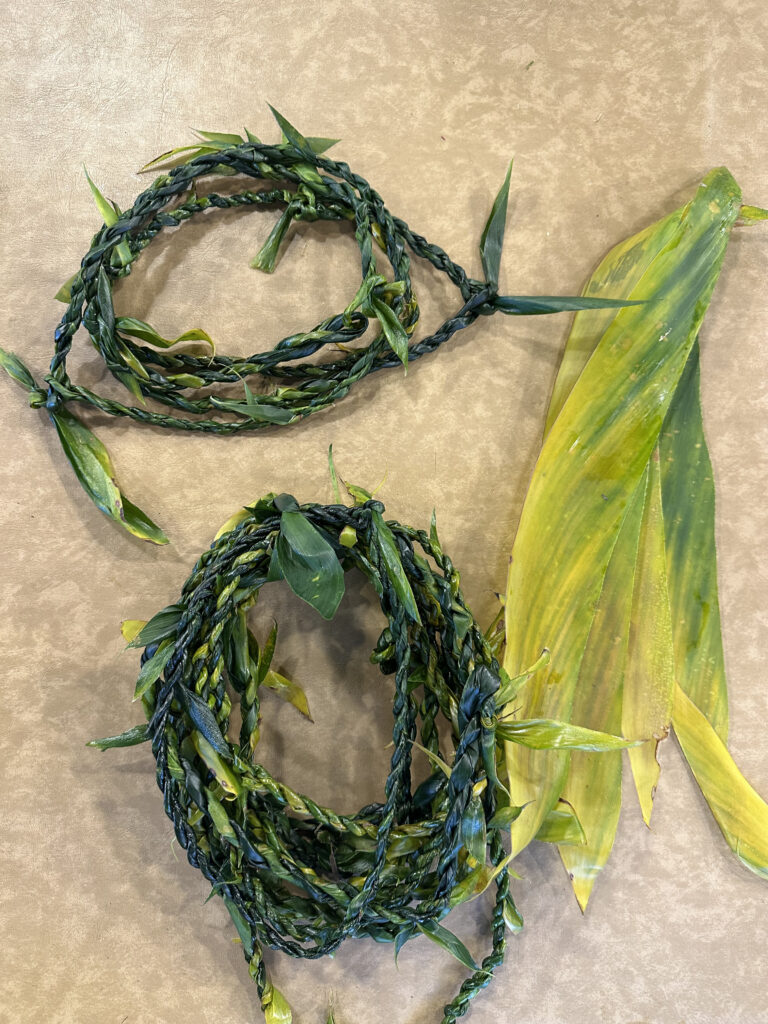
At the Wahiawā Botanical Gardens, the practice of lei making is taught to visitors, both to carry on the tradition and teach the significance of the weave to visitors, but also to aid in the onerous task of weaving approximately 53,000 lei for Memorial Day. The Wahiawā Botanical Gardens contributes 7,000 natural lei every year to the project. In the hour and a half the Whitworth students were there, we made one hundred woven Ti lei. Hundreds of organizations run similar lei making sessions for the five months leading up to Memorial Day, freezing the lei braids to keep them until May.
This tradition began in 1949 when the Mayor of Honolulu City and Council, J.H. Wilson made a pledge that every grave in the Punchbowl Cemetery, known as Puowaina in Hawaiian, would be decorated with a natural lei every Memorial Day to honor the fallen Hawaiian veterans.
Lei making is a traditional Hawaiian practice, one that symbolizes connection to the land and others, a tie that binds us to one another and honors the earth. The act of weaving a lei and placing it around another’s neck is a demonstration of deep respect, love, and commitment. Lei are made and given at significant events in life, such as weddings, graduations, births, or even long journeys.
Though lei are made from many different plants and flowers, Ti leaves are very traditional. Sometimes the woven twist is used as a base to support fresh blooms. This type of lei is known as Haku and is more frequently used as a headdress because of the sturdy nature of the Ti leaf braid.
The Ti plant was brought over by early Polynesian settlers of the islands. It was used, and often still is today, to make sandals, Hula attire, ropes, thatch, medicine, and of course, lei. It is a sacred plant to the Hawaiian people and was long considered to bring luck and protection, hence why it is so often used in lei making.
We were taught how to weave a simple Ti leaf lei by twisting and wrapping the leaves over one another. There was a rhythm to the task, and once you got the hang of it, conversation flowed easily. The practice of weaving lei, bent over, shoulder to shoulder with your classmates, was a peaceful and moving experience. We chatted about mundane topics, fingers slick with Ti leaf extract, head-to-head around the long table.
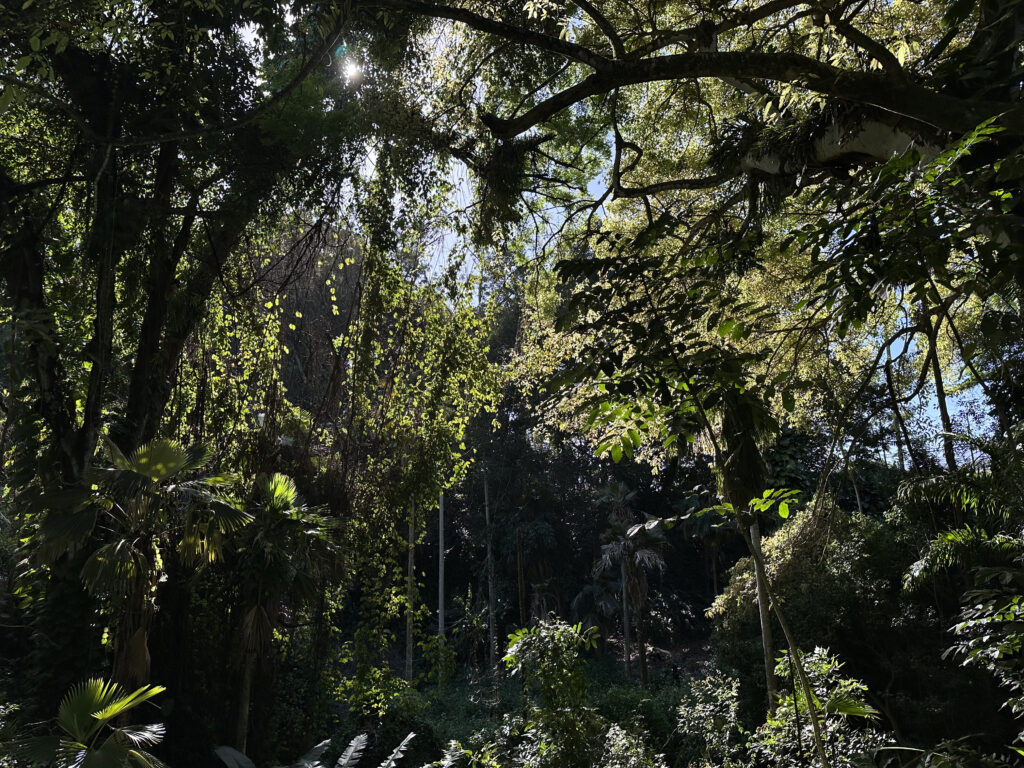
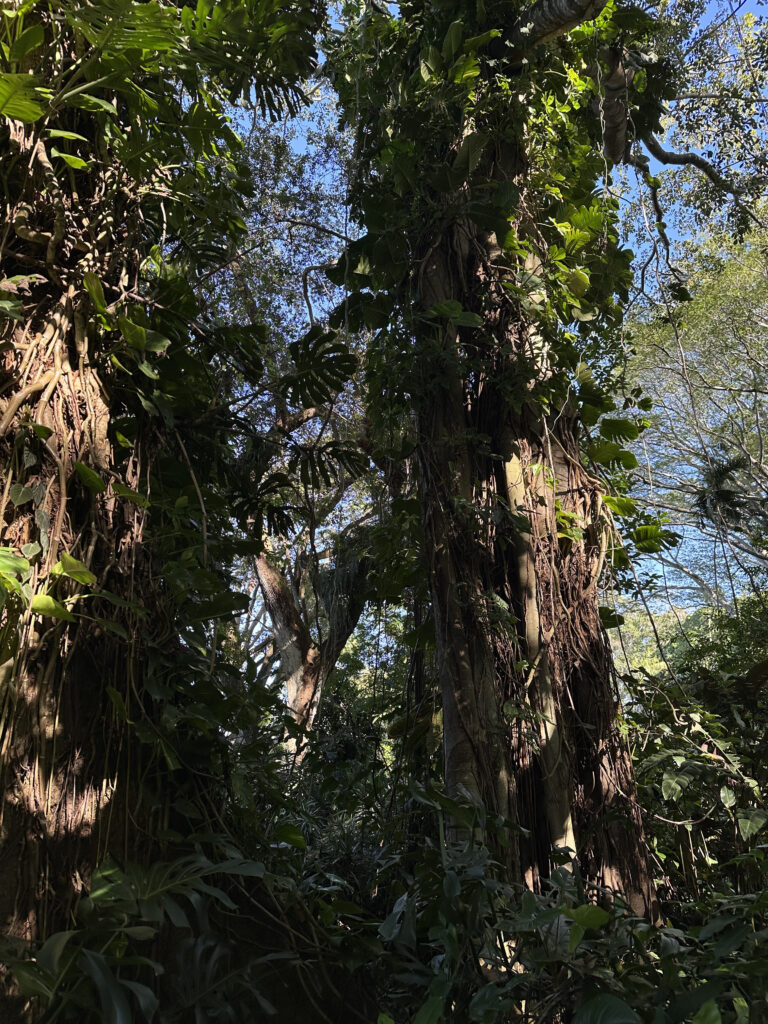
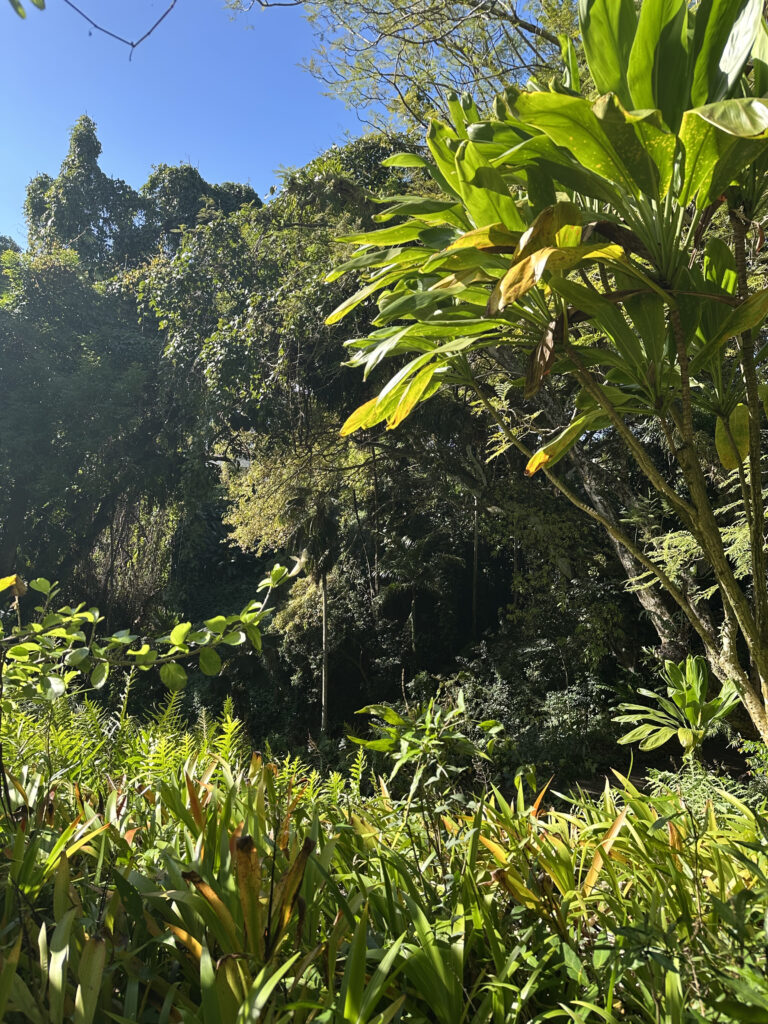
After our lei making time, we were able to roam the 27-acre garden for about half an hour. All of the plants found in the garden are all native to the islands of Hawaii. This garden is part of a group of five all spread across the island. The garden was created in the 1930s and still stands today. Inside is an amazing array of all sorts of trees and plants such as the Stinking Toe Tree, Snake Fruit, Wiliwili, and many, many more. There are trails leading deep into a forest of at least 20 different kinds of trees, and there are paths that calmly flow through patches of pretty flowers. In the half hour we wandered through the garden, we only scratched the surface of everything it had to offer. I walked down one path that led deep into the forest, and I almost couldn’t find my way out. There was just so much to see that we all lost track of time. From the little flowers to the giant trees, everything was beautifully created and placed in that space for us to enjoy. I wish we could have spent more time there just because there was so much to see, but the time we had, between the lei making and exploring, was well spent and very much enjoyed.