
Teaching Honors and Writing on Chrysostom

Kaitlyn Hawker
Blog Editor-in-Chief
I had the honor of meeting Dr. Samantha Miller for lunch in the Pines to talk about her newest Honors class and her recent publication over sandwiches.
Dr. Miller is teaching her first H-tag class this semester, “TH 282H: Reading the Bible in 21 Centuries.” Though the Honors tag is new, the course is not. She’s taught the same course (“TH 255: Reading the Bible Through the Centuries”) for many semesters but gladly took up the challenge to teach it as an Honors class.
The course begins with the formation of the Bible, reading and discussing Ancient, Medieval, Reformation, Modern, and Post-Modern biblical interpretations. Her Honors students this semester will present a final presentation in the Spring Honors Showcase May 11th, 2026, demonstrating how they would interpret a passage of the Bible in the style of their chosen time period.
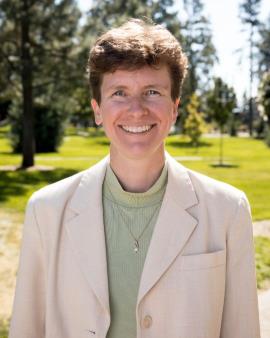
Dr. Samantha Miller
Associate Professor of Theology
The Shared Curriculum Bib Lit Requirement does not often make for engaged discussions, but this semester’s Honors class is more excited to engage with tough ideas and work through complicated exegesis. Dr. Miller said that students often get into deeper conversations earlier on, both with peers and whole-group discussion.
Similarly, students in this class are, generally, more interested in the topic than those who want to simply knock out their Bib Lit requirement. Honors students pick their classes with their own curiosity in mind. The History of Biblical Interpretation has had a huge impact on the Western Thought, and Honors students may find learning about this useful in their major classes and life.
John Chrysostom: An Introduction to His Life and Thought
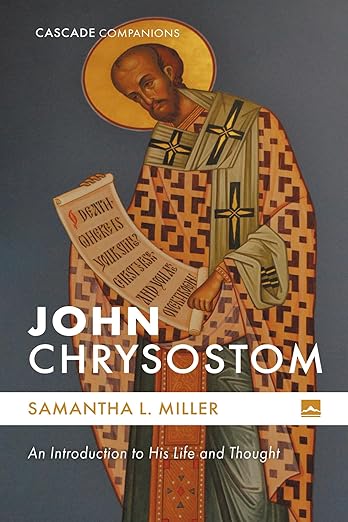
Dr. Miller had a book published at the end of January 2026: John Chrysostom: An Introduction to His Life and Thought. This is the third book she’s written about Chrysostom, though she says this is very different from her previous two. The first was a published version of her doctoral dissertation and the second was similarly aimed at academic audiences who study the same period she focuses on.
Life and Thought on the other hand, was written for her friends and the people at her church. It was published a part of the Cascade Companion’s series, which was created to make space for theological commentaries that anyone could pick up and read.
Dr. Miller went into this project with the intention of making Chrysostom accessible for the average layperson. And to ensure the text was understandable, Dr. Miller had some of her friends beta read the manuscript so they could point out what was confusing before the work went to print.
Chrysostom wrote a lot, which is part of the reason why Dr. Miller finds him such a fruitful field of study. He was highly respected but wasn’t studied in the 20th century as much as the other church fathers. Dr. Miller assumes this is because Chrysostom was primarily a preacher and therefore wasn’t doing the speculative or philosophical theology some of his peers were.
Dr. Miller finds Chrysostom particularly compelling because preaching is the main way both ancient and modern Christians learned theology, and though it might not be as respected in the field of Theology, it’s the foundation of the Global Christian community. Not everyone can sit down and read dense theological texts, but everyone can sit in a church on Sundays and hear a sermon.
In that sense, instead of writing a dense theological text like her previous two books, Dr. Miller is ‘preaching’ John Chrysostom with Life and Thought, speaking directly to Christians at their level.
You can purchase John Chrysostome: An Introduction to His Life and Thought at Amazon, Barnes & Noble, and more.