Haoles in Hawaii: Trip to the Polynesian Culture Center

Ellie Van Mieghem & Hannah Patterson
On the 5th day of the First Year Honors group’s stay in Hawaii, we visited the Polynesian Cultural Center. After a long, sun drenched day full of information, performances, and beautiful scenery, most of us came away with a deeper understanding of Polynesian culture and the complex traditions preserved in places like the PCC (Polynesian Cultural Center).
First Impressions
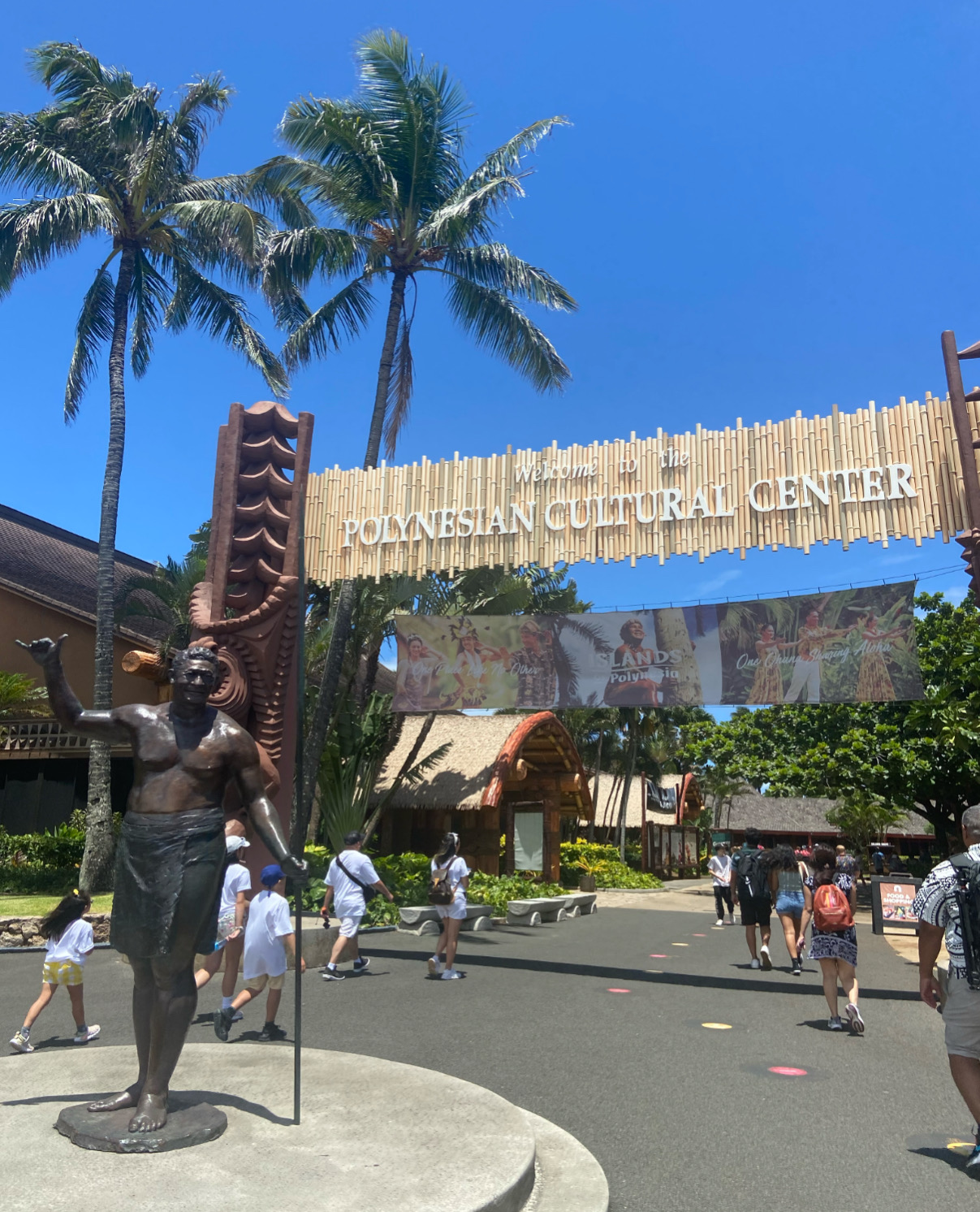
When our group first approached the building, there were gasps of excitement and awe at the site’s cleanliness and beauty. Some students commented that “It feels like Disneyland!” It was a beautiful day: the sun shone through the lush green foliage and beat down on the clean, gritty cobblestone paths. It was a bit overwhelming, but in the best way. Families with young children scurried by with strollers, giggling and smiling at passersby. Old couples sat quietly on park benches, taking it all in. Groups of students spoke quietly amongst themselves and jotted their thoughts on small notepads, and native Polynesians exclaimed in excitement as they recognized relics and languages familiar to their cultures. I immediately noticed the diversity and energy of the crowd.
Significance and History
The history of this site dates back to 1963, when it was built in Laie, Hawaii. It was founded by the Church of the Latter-day Saints in partnership with the BYU School of Hawaii. BYU offered work to students in exchange for schooling scholarships. Brigham Young University offers a Mormon perspective on learning, and those who attend this school are encouraged to practice the Mormon faith but aren’t required to be Mormon. The Polynesian Culture Center is Hawaii’s #1 attraction, so popular that it has a TV series called “Sharing Aloha” that discusses how the PCC was established. This place has a legacy and “kuliana” that brings not just the islands of Polynesia together, but also all people who embrace the curiosity of each culture.
The Tour
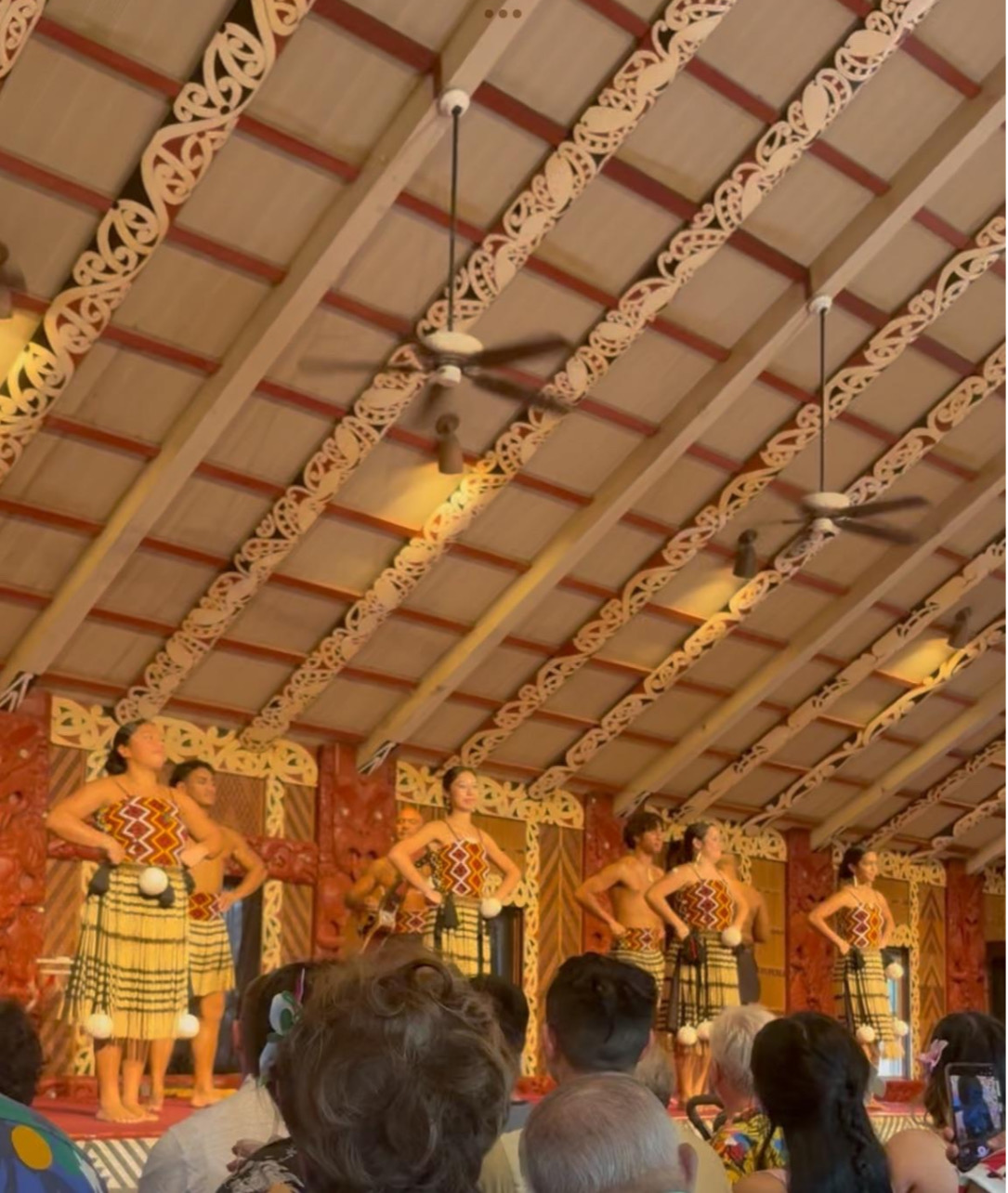
Our group was guided through the center by a Tahitian tour guide named Kaleb, who made lighthearted comments about how we looked “like one big family!” He patiently explained the sites of importance, such as a traditional Hawaiian hut and the sacred grounds that the king himself had stepped on. He explained the dynamics of ancient Hawaiian families: that daughters were encouraged to stay at home until they married, while sons were urged to go out and explore the world to cultivate their masculinity. In Samoa, men were expected to cook rather than the women, and they did so in the ground by making fire with their bare hands. In Tahiti, drummers interacted with dancers to create an unforgettable Tahitian performance. In New Zealand, there were Maori dancers who did songs and the haka which is an ancient practice that channels a spiritual energy within the culture of New Zealand, connecting its people. Although we didn’t tour the islands of Hawaii and Fiji, we got to experience learning the culture throughout the luau and the night show.
The Luau
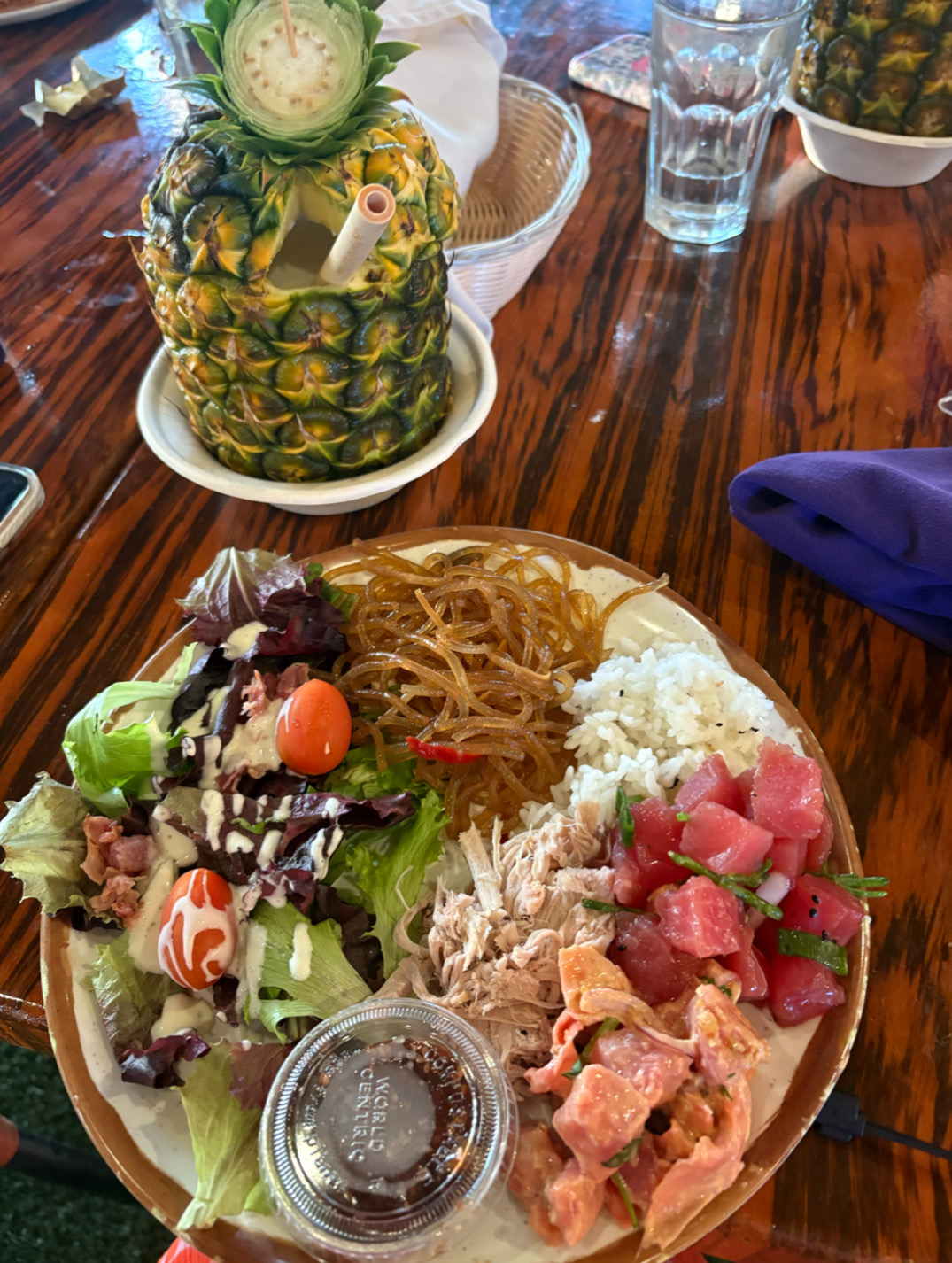
The Polynesian Culture Center offers a luau at the end of the tour, including a buffet, hula performances, and history about Hawaii’s last reigning monarch: Queen Liliuokalani. She is deeply respected. The Center told stories of her imprisonment and about how she found ways to connect with her people even while she was trapped inside her own palace walls. The luau included roast pig and lots of delicious food. Fresh poke, squid, rice, fruits, and much more were served–they even gave us pina coladas served in a pineapple! By the end of the luau, we were all stuffed and ready to fall asleep. There was so much beauty in this gathering, and the luau really shared aloha with all who were there to experience it.
Ha: Breath of Life
At 7:00 pm, there was a showing called “Ha: Breath of Life.” This spectacular attraction at the PCC is hosted nightly and is a major part of the overall experience. It is a 90-minute show complete with surround sound, special effects, and hundreds of dancers and actors from various Polynesian islands. It is a journey through the life of the warrior Mana and his beloved Lani. It is a captivating demonstration of Polynesian culture and island life, exploring themes of life, love, family, and death. Our group was engrossed from beginning to end. There was a 10-minute segment of the show that was entirely devoted to fire dancers. At one point, I looked over to my classmates and saw them each leaning forward in their seats, eyes wide, silently begging the dancers not to drop any of the flaming sticks they expertly spun and flung in the air. The show wrapped up our day in a profound and beautiful way, recentering us on what is truly important and yet temporary in this life: family, love, and honor.
Ending Opinions
As students, we enjoyed embracing the beauty of Hawaii, Tahiti, Fiji, New Zealand, and Tonga. Each island was true to its own culture and was special in its own specific way. While reflecting on the experience as a group–both students and teachers–some conflict came about when discussing the BYU students performing at the PCC. Some argued that the students were being exploited for their culture by doing so much work for others’ enjoyment, while others argued that they were proud and passionate about their work and that there was no problem. Some wondered if the place felt “too touristy” and if it was too commercialized with the costumes, performances, and overall presentation–or if the costumes felt “flashy” because they were authentic to what individuals really wore during that time. Either way, everyone in our group, even the young children, felt that they had learned a lot from the overall experience. Although there were minor disagreements, there was an effort from every single person to care about the culture and fight for its survival and authenticity.