Caitlin Teeter
CAITLIN TEETER Class of 2024. Biology and English Double-Major. Over the past few decades, studies from groups such as Scholastic have shown that children are

CAITLIN TEETER Class of 2024. Biology and English Double-Major. Over the past few decades, studies from groups such as Scholastic have shown that children are

My project exists to bring glory to God and honor His creative design for men and women by mirroring the literary structure of Christine de Pizan’s The Book of the City of Ladies. In this piece of creative nonfiction, the symbolic building of a Protestant church—beautiful, unadorned, and rooted in Scripture—serves as the framework for showcasing the biblical femininity of six extraordinary women from the Protestant Reformation.
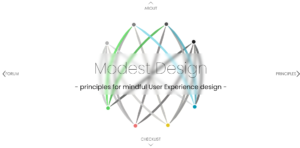
Sarah Immel, a senior double majoring in human computer interactions and English writing studies, is using the Honors program as a way to merge the different interests in her majors and design interdisciplinary projects.
KENDALL SANDHOP Class of 2024. Kendall is an undergraduate student studying Biology and Environmental Science at Whitworth university. Her graduating plan is to take a
Our climate policy framework is largely built on two significant bills: the 2019 Clean Energy Transition Act, which commits the state to greenhouse gas emission-free electricity generation, and the Climate Commitment Act, which implements a carbon tax and emissions trading scheme. While the CCA and CETA are essential steps, any policy framework inevitably leaves out certain local concerns. My research explores one way that these policies leave out the Spokane area, particularly in the context of our unique geologic history. The Spokane Valley–Rathdrum Prairie Aquifer is particularly vulnerable to contaminated runoff.
In an era where over 15,000 self-help books are published in the United States each year, everyone seems to have two cents to share about how we can improve our lives. Despite these countless publications, each quick-fix or new mindfulness appears ephemeral. Self-help needs help.
As a Christian in the science field, these two dominant fields have always been a big part of my learning and worldview. During our time at Cambridge, we read a book by Yuval Harari titled Sapeins. In this book, Yuval Harari is attempting to tell the story of science throughout human history. I observed that in this attempt, Harari is guilty of placing science in a bubble, ignoring big changes going on in the world, specifically around the Scientific Revolution. This realization, paired with my strong passion and fascination for science and religion, led me to desire to be able to better prove that these two fields are not in conflict.
CASEY PROCIW Class of 2024. Casey is a graduating senior with an English major and a Medieval/Early Modern Minor. He is a member of Sigma
AARON BRATT Class of 2024. Aaron Bratt is a double major in music composition and English writing. Aaron cares deeply about storytelling and, although ecology
KYLE MARQUEZ Class of 2024. Political Science and Theology Majors. How to Partner for Justice: Linking Whitworth with the world through education and activism
EMMA MAPLE Class of 2024. Communication Studies and Political Science Major. The Case of the Missing Context: Newspaper coverage of the Supreme Court’s decisions in
AUBREY PARKINSON Class of 2024. History Major, Medieval and Early Modern Studies Minor. My career goal is to be a librarian. A Beginner’s Guide
CASEY MODDRELL Class of 2024Majors: Chemistry and Political ScienceMinor: Law and JusticeFuture Plans: A year of service followed by completion of a JD/PhD in Chemistry.
As the world increasingly deals with the presence of Climate Change, we will increasingly need quality research to understand how it will affect the ecosystems that surround us. For this reason, this project is a collaboration with an existing research team investigating the effects of a changing climate on small aquatic ecosystems such as ponds. In the past, the associated research project has focused primarily on the effects of increasing pond temperatures. But, water oxygen saturation is another key indicator of ecosystem health. Not only does oxygen saturation directly affect the well-being of pond flora and fauna, but it also is affected by a warming climate.
ELEANOR JEFFERS Class of 2024. Philosophy Major. Details Forthcoming. Care Ethics for the Recently Deceased My project will analyze how an ethic of care can
My honors capstone project investigates how systemic marginalization affects the political participation and lived experiences of religious minorities in Pakistan, focusing particularly on Christian communities in Karachi. Through qualitative research involving semi-structured interviews, I examined how fear, discrimination, and historical shifts in state ideology contribute to political disengagement. Participants expressed deep frustration with exclusionary practices, legal discrimination through blasphemy laws, and socio-economic disenfranchisement. Yet, I also uncovered stories of remarkable resilience such as communities leveraging civil society, clustering in safe neighborhoods, and using social media as new platforms for political expression.
KERI RONEY & CORINNE VASILOFF Keri: Class of 2024: I am a wife and a mother of two amazing children. After 15 years of being
Broadly speaking, our world tends to see religion as a sort of ‘meaning-making’ device. In faith, one is able to carve divine order into the chaos and fragmentation of the human experience. This makes faith a vehicle for hope—for settling the existential realization that nothing in our lives makes sense. The premise of this project, however, challenges that assumption: What if grasping after order and unity is not a source, but an obstruction to our ability to embrace life?