
Leveling the Playing Field: Improving Accessibility for Students with Disabilities Pursuing Higher Education in STEM
Claire Tolo
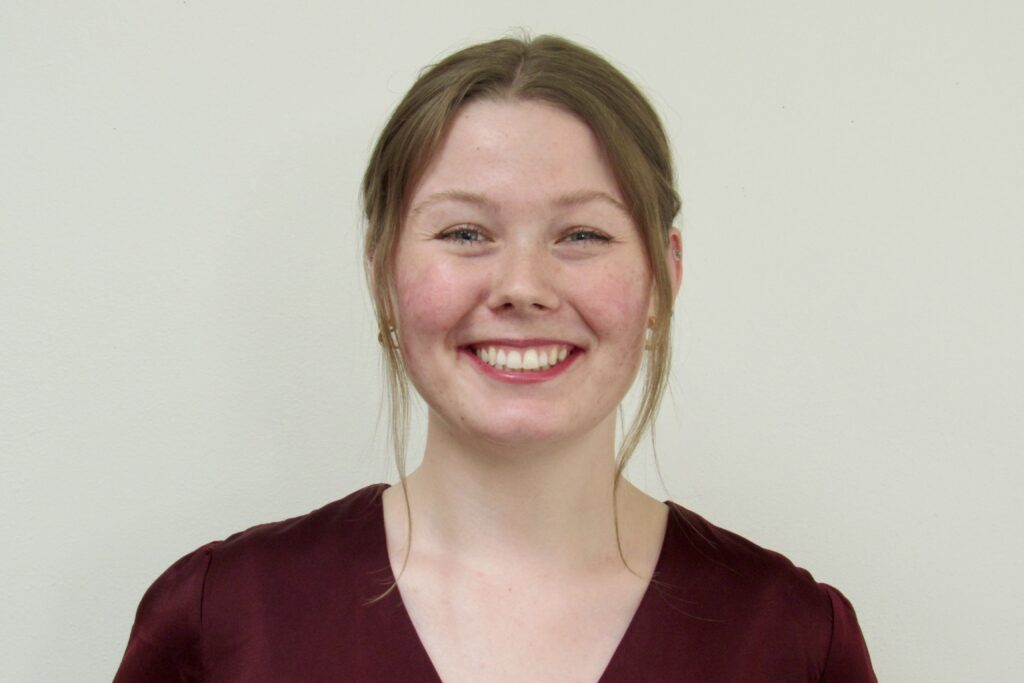
MAJOR: Biochemistry
BIO: Claire is a senior at Whitworth University where she is majoring in Biochemistry. She was born and raised in Sammamish, Washington. Growing up, Claire was a “camp kid” and this is something she brought with her to Whitworth. Unsurprisingly, Claire has spent most of her time at Whitworth working or volunteering at summer camps around the country. One of the most influential being Camp Promise – a free summer camp for teenagers and adults who have neuromuscular disorders. Their mission is to foster a community where their campers feel truly limitless. Her work at Camp Promise opened the door for her to work as a Cope Health Scholar, where she volunteered on a medical surgical unit. Through Camp Promise, Claire later became connected with Rocky Mountain Village, an Easterseals Colorado summer camp. There, Claire worked as a nurse’s aide with the goal of helping all campers thrive in the RMV community. She has also volunteered with Kesem at Whitworth as their Operations Coordinator, where she designs their summer camp curriculum. Kesem is a community whose goal is to support children through and beyond their parent’s cancer diagnosis. After graduating, Claire plans to pursue her Master’s in Nursing, with the goal of becoming a nurse practitioner working in emergency medicine.
Project Overview: Students with disabilities (SWD) make up 17-19% of the student population in higher education institutions. However, research focused on them accounts for only 1% of papers published in education journals. Furthermore, disabled students are less likely to enroll in science, technology, mathematics and engineering (STEM) courses compared to their abled peers. Researchers have posited that this may be due to both physical barriers, such as inaccessible laboratories, and cultural ones, like negative experiences with peers and faculty. So what can universities do to improve the landscape of their STEM cohorts to make them more equitable and inclusive for students with disabilities? Existing research has suggested a variety of solutions, ranging from implementing Universal Design Learning (UDL) to purchasing specialized lab equipment. But there does not yet exist a compilation of the current recommendations for interventions and best practice for improving equity and accessibility in STEM departments. In this project, I will examine the specific challenges faced by SWD in the classroom and laboratory, interventions to improve challenges faced, and practical suggestions institutions can utilize to effectively implement the interventions in their STEM programs.