
A Query for Queerness: Queer Children's Literature and Building a More Accepting Future
Kaitlyn Hawker
BIO: I was born and raised in Spokane, Washington, this city is my home and I wouldn’t have it any other way. At Whitworth, I’ve spent my time dedicated to my departments and the Honors Program. I spent two years in the Forest Treble Choir, nearly two years as Honors Blog editor, and sitting president of Whitworth’s chapter of Sigma Tau Delta. I attended the 2025 and the 2026 Sigma Tau Delta Conventions with fiction pieces and won 2nd place in the Prose category in 2026. I was a departmental scholarship recipient for English, Education, and Honors for the 2025-2026 school year. I will student teach next year at Shadle Park High School, though my interests in children’s literature will drive my career in education. After graduation I hope to get a job teaching ELA in Spokane with plans to receive a Masters in English Literature or Creative Writing down the line.
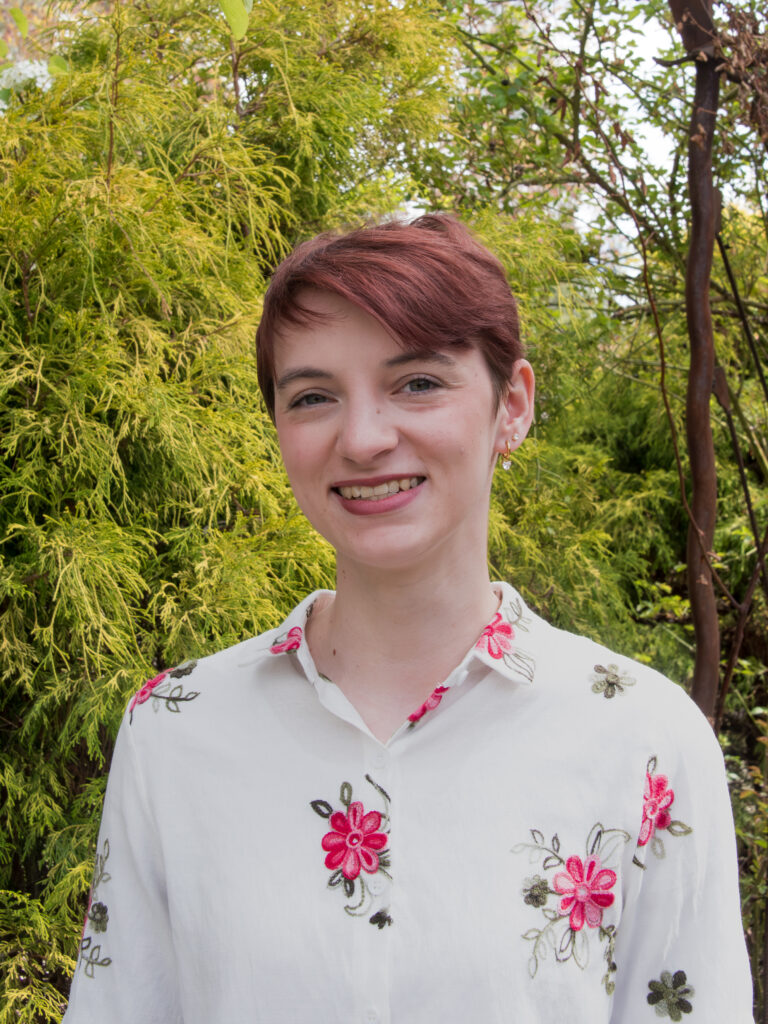
MAJORS: Secondary Education, English/English Language Arts
Minor: English Lanuage Learners
Project Overview: With the legalization of gay marriage in 2015, legal queer families entered the societal view. However, normalization cannot happen without positive visibility, which usually comes in the form of representation in the media society consumes. Queer characters in movies, TV shows, and adult books have appeared for decades, sometimes even centuries, but limiting queer representation to adult-only content does more harm than good. It teaches children and the culture at large that queer stories are explicit, shameful, and not appropriate.
Children’s literature is fundamentally a moral education, and those in children’s publishing have the power to dictate what children get to know. When reflecting on the fiftieth anniversary of the Children’s Literature Assembly, Thomas Crisp said, “As we know, children’s literature defines what is deemed knowable for young readers, reinforcing or challenging power structures in ways that extend well beyond words on the page— and when books disappear, so , too, do the ideas they contain.” In addition, conservative book banning disproportionately targets books with queer characters or storylines. Queer children’s literature demonstrates queer joy, storytelling, and youth in the same way children’s books with heterosexual characters have been portrayed for centuries. Introducing children to stories of queerness proves that being queer is normal, nothing to be ashamed of, and these stories can be age appropriate.